
Catherine Rosser is an Environmental Studies major at Dartmouth College.
As waste continues to accumulate and cause environmental and health problems, an increasing number of American counties are looking towards alternative and more sustainable ways of managing their waste. Among the jurisdictions innovating in waste management is Lancaster County Solid Waste Management Authority (LCSWMA). The LCSWMA diverts the vast majority of its municipal solid waste from regional landfills while generating an average of 292 million kWh of electricity through its waste-to-energy facilities, enough to power about 20% of the homes in the county. The system functions effectively because it operates as a single, coordinated loop: localized transfer hubs feed two waste-to-energy (WTE) facilities, material recovery facilities, and landfill disposal under a unified framework.
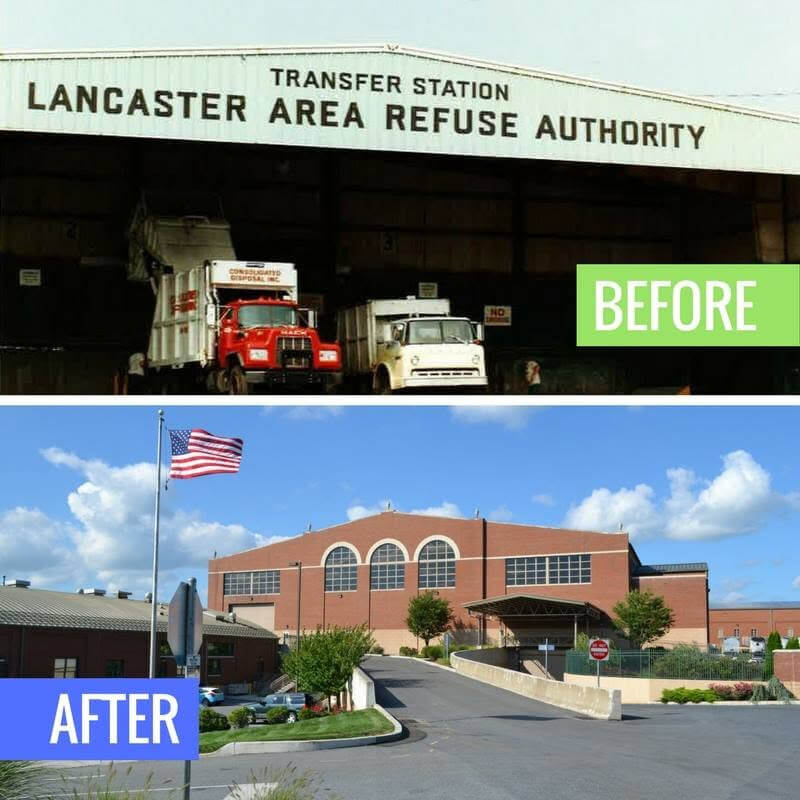
Lancaster has created an integrated network of county infrastructure that transforms downstream waste management into a cohesive system through the use of comprehensive contracts for hauling, processing and disposal. Recovery facilities first sort and process recyclable materials, historically diverting up to 40% of discarded materials from disposal. Since their work is dependent on proper recycling habits, Lancaster has also invested in educational programs for the public. Another key component is the Transfer Station Complex which reduces garbage truck traffic, in turn reducing emissions caused by congestion on the roadways. At the station over 2,000 solar panels at the site offset around 80% of the facility’s electrical needs. From there, combustible post-recycled waste is routed to two WTE facilities, reducing total material volume by roughly 90% while delivering electricity back to the grid.
This structural integration also delivers improved program performance. Generating revenue from renewable energy and recovered recycling commodities helps protect municipalities from volatile open-market tipping fees. Standardized operational data across each facility also simplifies environmental reporting, enhances regional contracting leverage, and provides the verified performance metrics needed to underwrite green bonds for future capital projects.
For municipal leaders and sustainability directors, Lancaster demonstrates that true sustainable materials management depends on measuring and optimizing every touchpoint downstream from the curb. The SWEEP (Solid Waste Environmental Excellence Performance) Standard tracks and gives credit for many of the aspects of Lancaster’s program from tracking of Municipal Solid Waste (MSW) to promoting their programs to reduce MSW to even OSHA compliance documents. By establishing clear, third-party criteria across collection, post-collection recovery, and disposal, SWEEP provides local governments and private operators with a verifiable roadmap to turn routine waste operations into high-performing, resilient infrastructure.